In This Guide
Free legal aid in India is available to women, children, SC/ST members, persons with disabilities, people in custody, industrial workmen, victims of trafficking or disasters, and people below a set income limit. Apply at your District Legal Services Authority (DLSA) or Taluk Legal Services Committee, or call the NALSA helpline 15100 for guidance.
Justice should not depend on whether you can pay a lawyer. Article 39A of the Constitution directs the State to ensure equal justice and free legal aid, and the Legal Services Authorities Act, 1987 puts this into practice through a network of legal services institutions from the taluk level up to the national level.
What does free legal aid include?
Legal aid is broader than a free lawyer in court. Depending on your need, it can include:
- Legal advice and consultation on your problem
- An advocate to represent you in court, paid for by the legal services authority
- Help drafting applications, replies, notices and petitions
- Court fees and certain other expenses in the case
- Help to settle disputes through Lok Adalats and mediation
Legal aid can be given in civil, criminal, family, labour and other matters, and at different levels of court.
Who is eligible for free legal aid?
Section 12 of the Legal Services Authorities Act lists who is entitled to legal services. You may be eligible if you are:
- A woman or a child
- A member of a Scheduled Caste or Scheduled Tribe
- A victim of trafficking in human beings or of begar (forced labour)
- A person with a disability
- A victim of a mass disaster, ethnic violence, caste atrocity, flood, drought, earthquake or industrial disaster
- An industrial workman
- In custody, including in a protective home, juvenile home or psychiatric hospital or nursing home
- A person whose annual income is below the limit fixed by the state government (or the central government, for matters before the Supreme Court)
The income limit is different in each state and is revised from time to time, so check with your DLSA. If you fall in any of the other categories, such as being a woman or a member of an SC/ST community, income is generally not the test.
Tip: You do not need to prove everything before you approach the authority. Go to the DLSA, explain your situation honestly, and ask what documents they need from you.
Where to apply for free legal aid
Legal services institutions exist at every level:
- Taluk Legal Services Committee: at the taluk or sub-division level
- District Legal Services Authority (DLSA): in every district, usually in the district court complex
- State Legal Services Authority (SLSA): at the state level
- National Legal Services Authority (NALSA): at the national level
For most people, the DLSA or Taluk Committee is the right starting point. You can also call the NALSA helpline 15100 to understand where and how to apply.
How to apply: step by step
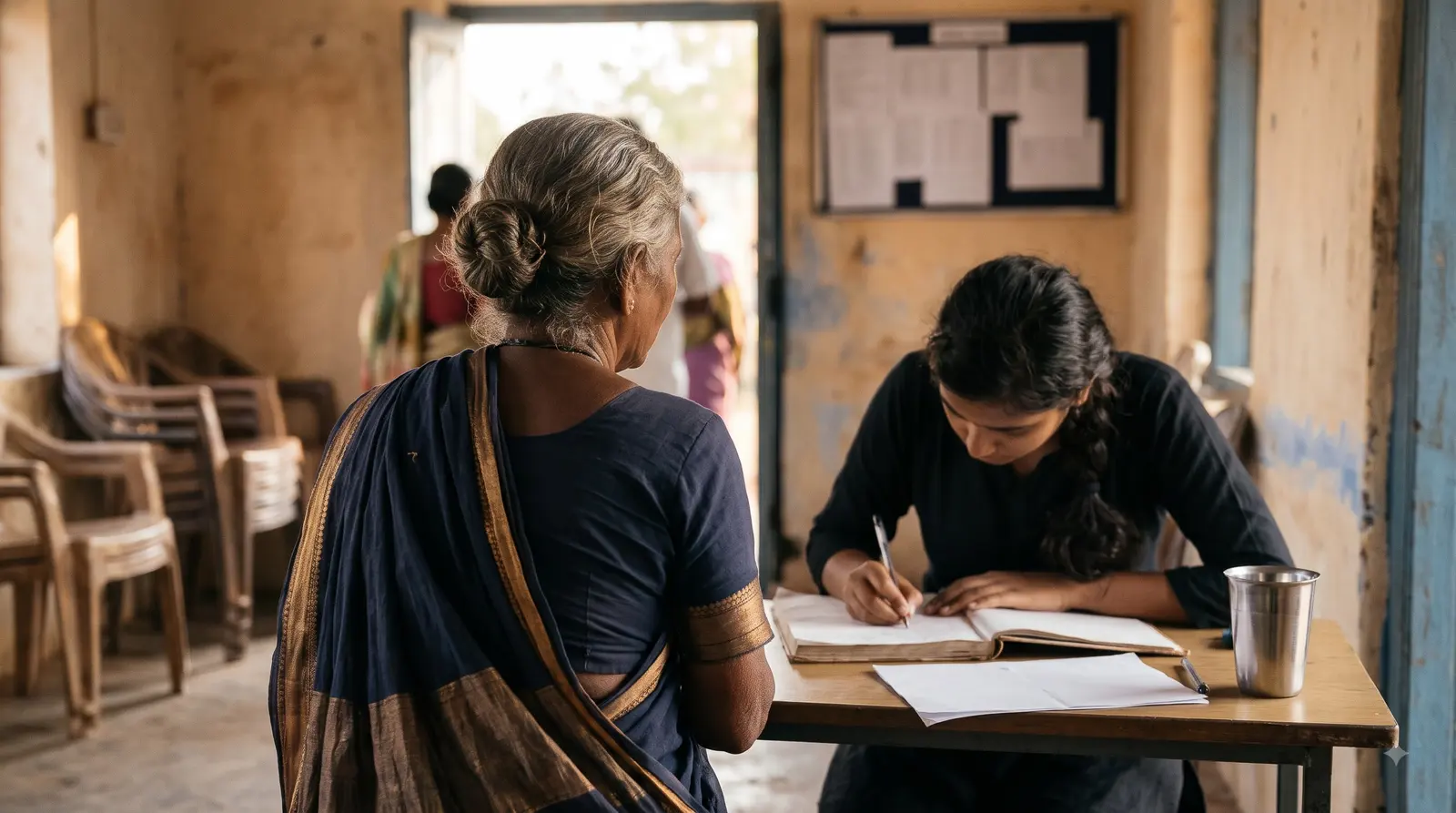
- Find your DLSA or Taluk Legal Services Committee. Ask at the district court or search for your district's legal services authority.
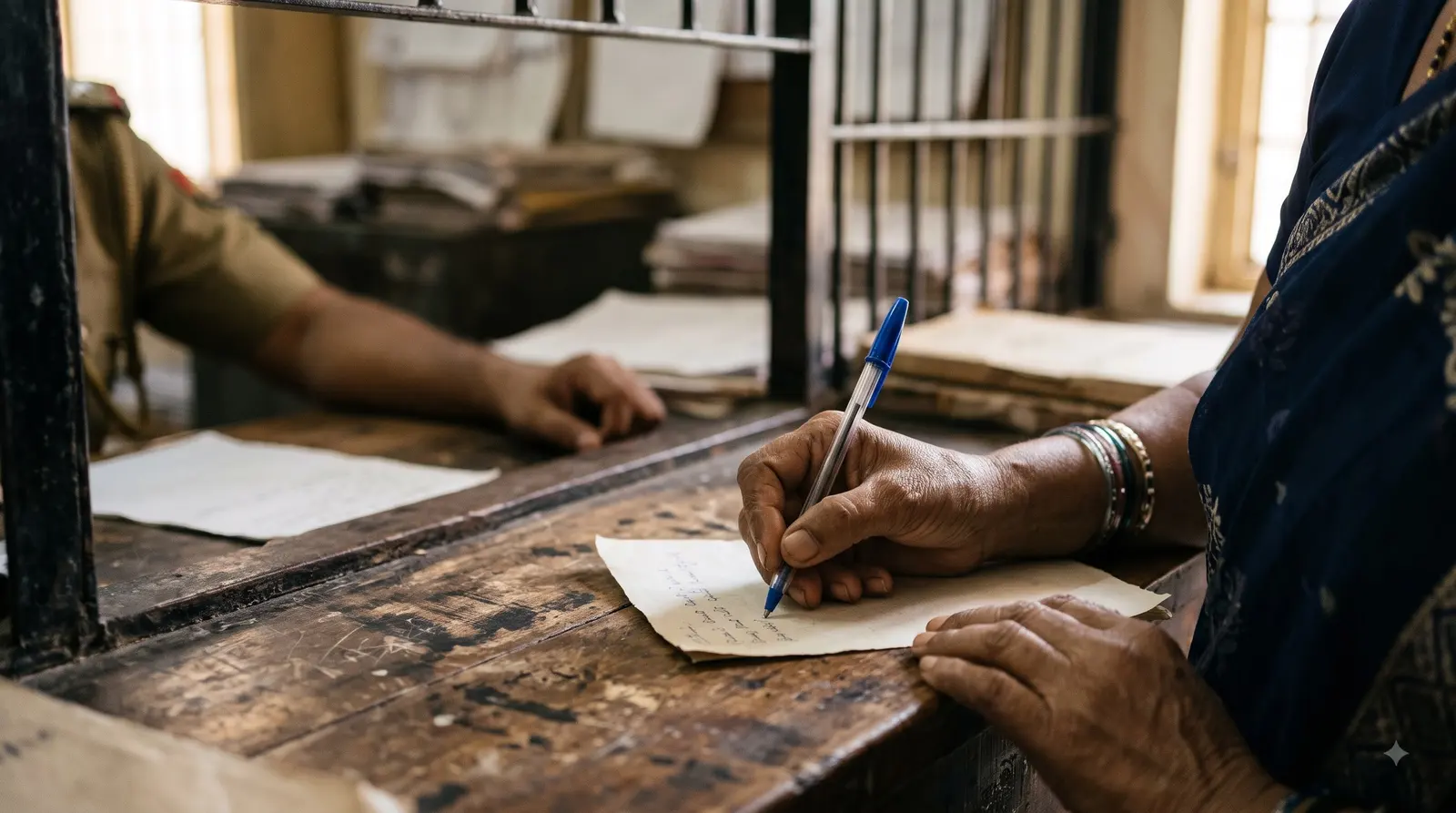
- Visit the front office or legal aid clinic and ask for the legal aid application form. Some authorities also accept applications online, so check your DLSA's or state authority's website.
- Fill in your name, address, contact details and a short description of your problem. If you are in a category under Section 12, mention it.
- Attach whatever supports your eligibility, such as a caste certificate, disability certificate or income declaration, and copies of documents related to your case.
- Submit the application and take a receipt or note the reference number.
- The authority examines your application. If you are found eligible, it assigns a panel advocate to advise or represent you.
- Stay in regular touch with the assigned advocate, attend dates and share every document and update.
If you are in custody, you can ask the police, the jail authorities or the Magistrate for a legal aid lawyer. Free legal aid is part of your rights as an arrested person if you cannot afford a lawyer.
What are Lok Adalats?
Lok Adalats are forums organised by legal services authorities to settle disputes by agreement. They take up cases pending in court and disputes not yet filed, such as many money recovery, motor accident, family and utility bill matters.
- No court fee is payable for a dispute taken up in a Lok Adalat.
- The award of a Lok Adalat is final and binding on the parties.
- Settlement is voluntary. If you do not agree, the case continues in the regular court.
What if you are not happy with the legal aid lawyer?
If you feel your assigned advocate is not attending to your case, first speak to them about your concerns. If that does not help, you can write to the Secretary of the DLSA explaining the problem and ask for a change of advocate.
How NYAY GHAR can help
If you are unsure whether you qualify for legal aid, or you want guidance on your options, you can request legal assistance and be connected with an advocate through our legal consultation services. If you have been arrested or a family member is in custody, read about the rights of an arrested person. Before any meeting with an advocate, our first meeting with a lawyer checklist can help you prepare.
This guide is general legal information, not legal advice for your specific case.
Written by the NYAY GHAR team from the relevant Acts and Supreme Court judgments, for general awareness. Laws change, so check the current position with a qualified advocate before acting.
Official Sources
Frequently Asked Questions
Is free legal aid available only to poor people?
No. Women, children, SC/ST members, persons with disabilities, people in custody and certain other groups are entitled under Section 12 regardless of income. The income test applies to others.
What is the NALSA helpline number?
The NALSA helpline number is 15100. You can call it to understand how to get legal aid and which authority to approach.
Can I get free legal aid for a case in the High Court or Supreme Court?
Yes. Legal aid is available at different levels of courts, through the relevant legal services institution. Ask your DLSA or the State Legal Services Authority where to apply.
Is a Lok Adalat settlement binding?
Yes. A Lok Adalat award is final and binding on the parties. That is why you should agree only to terms you fully understand.
Need Help With Your Own Situation?
Every case is different. Share what happened and our team will review it and guide you to the right next step.