
In This Guide
- Can the police legally refuse to register an FIR?
- Common excuses, and what the law says
- What to do if police refuse to file your FIR: step by step
- What should your letter to the SP contain?
- What happens when you approach the Magistrate?
- What if the offence is non-cognizable?
- Keep your own safety first
- How NYAY GHAR can help
If the police refuse to file your FIR for a cognizable offence, you have three main steps. First, insist politely and give a written complaint. Second, send the substance of your complaint to the Superintendent of Police under BNSS Section 173(4). Third, apply to the Magistrate under BNSS Section 175(3) with an affidavit.
Can the police legally refuse to register an FIR?
For a cognizable offence, generally no. In Lalita Kumari v. Government of Uttar Pradesh (2013), the Supreme Court held that registration of an FIR is mandatory when the information discloses a cognizable offence. The police cannot refuse simply because they doubt your story, think the matter is "minor", or believe it belongs to another police station.
There are, however, situations where the police may lawfully take a different course:
- Non-cognizable offences. The police record the information in a register and refer you to the Magistrate. They can investigate only with a Magistrate's order (BNSS Section 174).
- Preliminary enquiry. For cognizable offences punishable with 3 years or more but less than 7 years, the police may, with permission of an officer of Deputy Superintendent of Police rank, hold a preliminary enquiry within 14 days to see whether there is a prima facie case (BNSS Section 173(3)).
If neither applies and you have reported a cognizable offence, the police should register the FIR.
Common excuses, and what the law says
- "This is not our area." The BNSS requires a Zero FIR: police must register your information regardless of where the offence took place and transfer it to the right station.
- "Bring proof first." You do not need to prove your case to get an FIR registered. Investigation is the police's job.
- "Settle it between yourselves." Police may suggest compromise, but they cannot make it a condition for registering a cognizable offence.
- "Just give an application, we will see." Taking an application without registering an FIR, when the information discloses a cognizable offence, does not meet the legal requirement.
What to do if police refuse to file your FIR: step by step
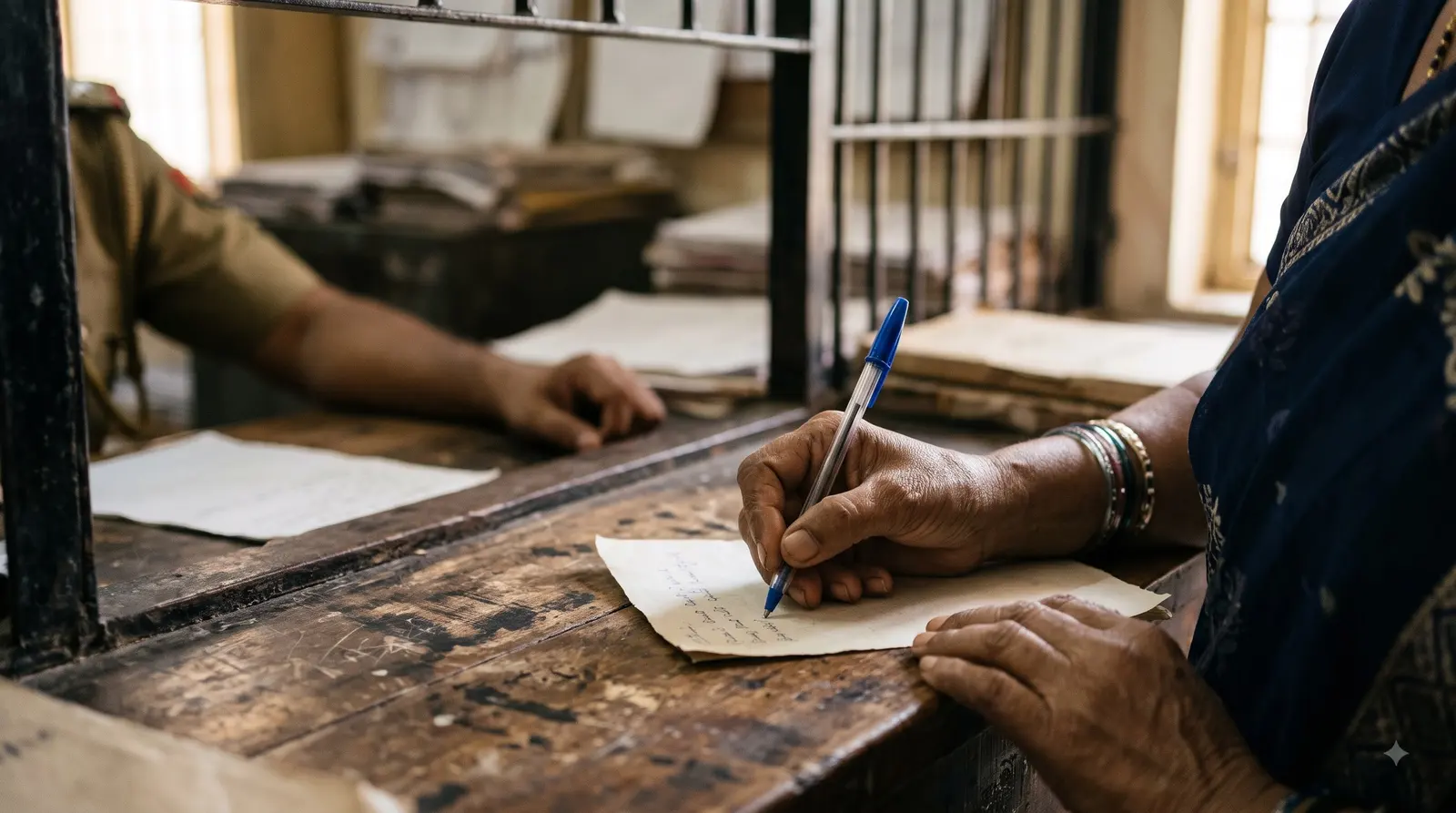
- Stay calm and put it in writing. Write a clear complaint with the date, time, place, what happened and who was involved. Sign it and keep a copy.
- Ask for a receipt. Request that the police station acknowledge your written complaint with a stamp or signature on your copy. Note the name and rank of the officer you spoke to and the time of your visit.
- Mention the law politely. Say that the information discloses a cognizable offence and that registration is mandatory under BNSS Section 173 and the Lalita Kumari judgment. In an emergency, call 112.
- Write to the Superintendent of Police. Under Section 173(4), you can send the substance of your information in writing to the SP (in some cities, the Deputy Commissioner of Police performs this role). Send it by registered post or speed post, or hand it over at the SP's office and keep the receipt. If satisfied that a cognizable offence is disclosed, the SP may investigate personally or direct a subordinate officer to investigate.
- Apply to the Magistrate. If the SP does not act, you can apply to the Judicial Magistrate under BNSS Section 175(3) (old CrPC 156(3)). The application must be supported by an affidavit, and you should show that you first approached the SP. The Magistrate can order the police to register and investigate.
- Keep every paper. Your complaint, receipts, postal slips, letters to the SP and copies of the application are your evidence that you tried every step.
Caution: Go to the Magistrate only after you have approached the officer in charge and the SP, and keep proof of both. An application under Section 175(3) is stronger when it shows the earlier steps were tried and failed.
What should your letter to the SP contain?
Keep it short and factual. Include:
- Your name, address and phone number
- The date, time and place of the incident
- A plain account of what happened and who was involved
- The police station you approached, the date of your visit and what you were told
- A request that an FIR be registered and the matter investigated
- A list of attached documents, such as a copy of the original complaint, medical papers or photos
Avoid emotional language and accusations you cannot support. A calm, organised letter is easier for a senior officer to act on.
What happens when you approach the Magistrate?
The Magistrate looks at your application, your affidavit and the earlier steps you took. The Magistrate may also consider what the police officer has to say. If the Magistrate is satisfied, the police can be directed to register an FIR and investigate. The procedure, the forms and the time it takes vary between courts and states, so it helps to have an advocate prepare the application and the affidavit.
Apart from Section 175(3), you can also file a complaint directly before the Magistrate, who can then examine you and your witnesses. Which route suits you depends on the facts, so take advice before choosing.
What if the offence is non-cognizable?
If the officer says your matter is non-cognizable, ask that it be entered in the station register and note the entry details. Then you can approach the Magistrate, who can order the police to investigate under Section 174. A non-cognizable offence is still an offence; it just needs the court's permission before the police investigate.
Keep your own safety first
If you face threats or are in immediate danger, call 112 without waiting for the FIR process to finish. Tell a trusted person what is happening and keep copies of all documents in more than one place.
How NYAY GHAR can help
When the police will not act, a well-drafted letter to the SP or an application to the Magistrate can make a real difference. Through NYAY GHAR, you can request legal assistance and be connected with a qualified advocate who can review your facts, draft your complaint and represent you before the Magistrate. See our criminal law practice area, and read our step-by-step guide on how to file an FIR in India.
This guide is general legal information, not legal advice for your specific case.
Written by the NYAY GHAR team from the relevant Acts and Supreme Court judgments, for general awareness. Laws change, so check the current position with a qualified advocate before acting.
Official Sources
Frequently Asked Questions
Is it compulsory for police to register an FIR?
Yes, when the information discloses a cognizable offence. The Supreme Court said so in Lalita Kumari v. Government of Uttar Pradesh (2013), subject to the limited preliminary enquiry now allowed under BNSS Section 173(3).
Can I go straight to the Magistrate if police refuse an FIR?
The BNSS expects you to approach the Superintendent of Police first under Section 173(4). Your application under Section 175(3) should show that step and be supported by an affidavit.
What is Section 175(3) of the BNSS?
It allows a Magistrate to order the police to investigate a cognizable offence. It replaces Section 156(3) of the old CrPC.
Can police ask me to compromise instead of filing an FIR?
They may suggest it, but for a cognizable offence they cannot refuse to register the FIR because you do not want to compromise.
Need Help With Your Own Situation?
Every case is different. Share what happened and our team will review it and guide you to the right next step.