
In This Guide
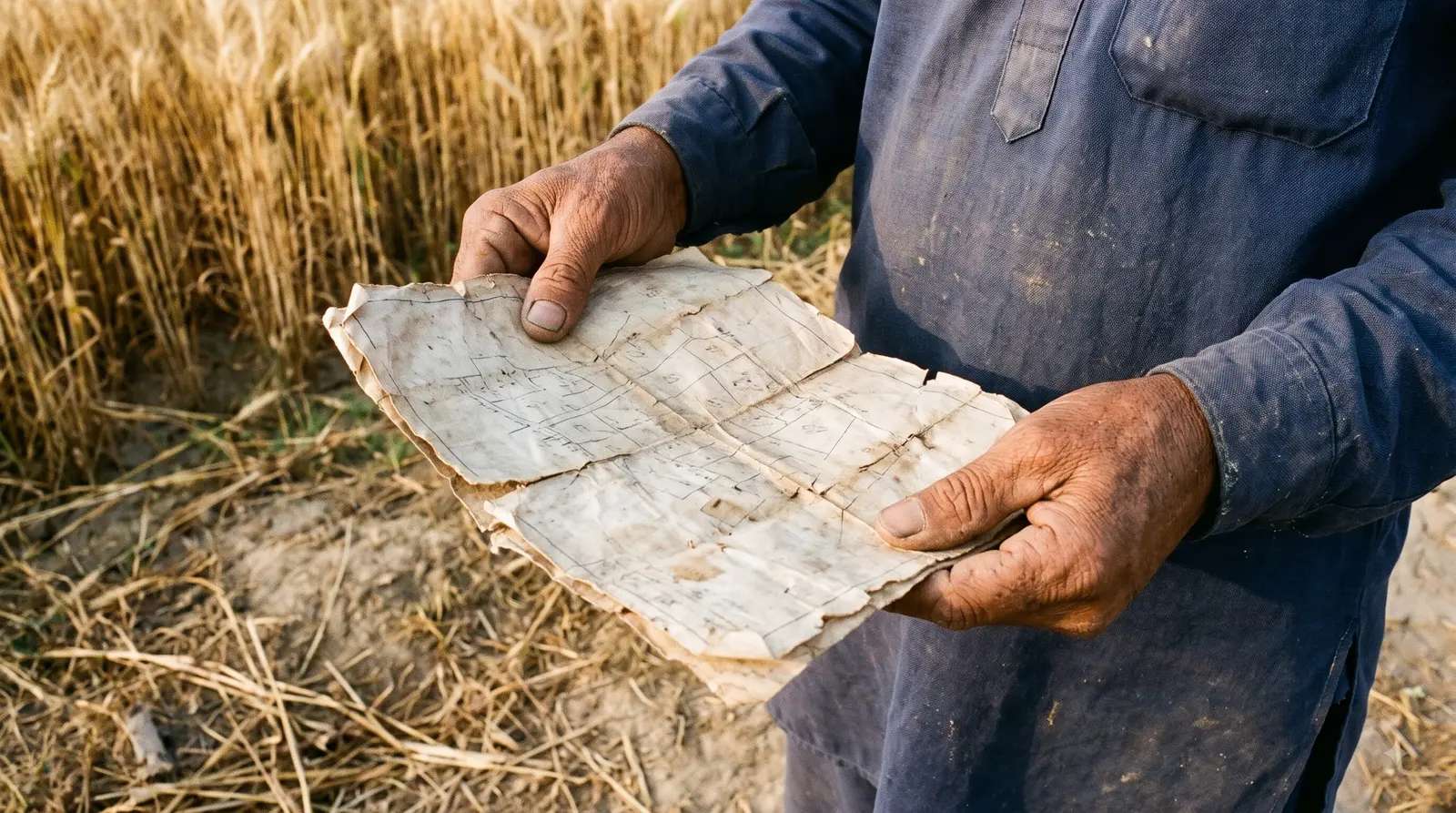
Land mutation, known as dakhil kharij, intkal or namantaran in different states, is the process of updating government revenue records to show the new holder's name after a sale, inheritance or gift. You apply at the tehsil or revenue office, or on your state's land records portal, with the deed or succession documents.
What is mutation of land?
Every state maintains revenue records for land, often called the record of rights. Depending on the state, you may know it as the khatauni, jamabandi, 7/12 extract or RTC. These records show who holds a piece of land, its area and other details used for land revenue and administration.
When land changes hands, the old name stays in these records until someone applies to change it. Mutation is that change: the outgoing name is removed and the new holder's name is entered. The procedure, forms, fees and even the name of the process differ from state to state.
Does mutation prove ownership?
No. This is the most important point to understand. The Supreme Court has repeatedly held that mutation entries are made for fiscal purposes, that is, to identify who should pay land revenue. A mutation entry by itself does not create or prove ownership.
Ownership comes from your title documents: a registered sale deed, a gift deed, a will, succession under the law that applies to your family, or a partition deed or court decree. Mutation simply brings the revenue records in line with those documents.
Even so, mutation matters in daily life. An updated record helps you:
- pay land revenue in your own name
- get loans against the land
- sell or transfer the land later without delays
- claim compensation or benefits linked to land records
- reduce the chance of disputes and fraud
When do you need to apply for mutation?
You should apply whenever the person holding the land changes, for example:
- after you buy land or property through a registered sale deed
- after the death of the owner, when legal heirs inherit
- after land is gifted to you through a registered gift deed
- after a family partition or a court decree divides the land
Do not assume that registering a deed updates the revenue records. Check the status yourself.
Documents usually required
Requirements vary by state, but you will usually need:
- the application form prescribed by your state
- for a sale or gift: a copy of the registered sale deed or gift deed
- for inheritance: the death certificate of the owner and documents showing who the heirs are, such as a succession or legal heir (heirship) certificate, or the will where there is one
- the latest extract of the land record
- identity and address proof of the applicant
- any fee or stamp the state prescribes
Where several heirs are involved, the revenue office may want details of all of them, and sometimes their consent or affidavits.
How to apply for dakhil kharij: step by step
- Get your documents in order. Make copies and keep the originals ready for verification.
- Apply online or at the tehsil. Many states accept mutation applications on their land records portal. Otherwise, apply at the tehsil or revenue office that keeps the records for the village or area.
- Pay any fee and keep the acknowledgement. Note the application or case number; you will need it to track the status.
- Notice and objections. The revenue office invites objections from anyone who claims an interest in the land, usually through a public notice or notice to the people concerned.
- Local verification. The local revenue official, such as the patwari, lekhpal or talathi depending on the state, may verify the facts and submit a report.
- Decision by the revenue officer. If there is no valid objection, the officer approves the mutation. If there is an objection, both sides are heard before a decision.
- Get the updated record. Once approved, download or collect a copy of the updated record and check that names, area and survey or khasra numbers are correct.
Where can you apply online?
Most states now have a land records portal. Some examples are UP Bhulekh (upbhulekh.gov.in) in Uttar Pradesh, Jamabandi (jamabandi.nic.in) in Haryana, and Bhoomi in Karnataka. Services offered online differ, so check your state's land records portal to see whether you can apply for mutation, track a case or view the record there.
Caution: Do not buy land only because the seller's name appears in the mutation record. Mutation is not proof of title, so have the chain of title deeds and any encumbrances checked before you pay.
What if someone objects or mutation is refused?
If someone files an objection, the revenue officer will hear both sides and decide whether to record the mutation. Remember that a revenue officer decides only the entry in the records. A genuine dispute about who owns the land is decided by a civil court on the basis of title.
If your application is rejected, ask for a certified copy of the order. State revenue laws usually allow an appeal or revision to a higher revenue officer, and the time limits are often short, so speak to an advocate promptly.
Common problems and how to handle them
- Long delays. Keep the acknowledgement, follow up in writing, and if needed, seek information about the status through an RTI application. See our guide on how to file an RTI online.
- Wrong entries. Spelling mistakes or wrong areas can usually be corrected by applying to the revenue office with supporting documents.
- Heirs left out. If one heir's name is entered and others are missed, the others can object or apply for correction, and the underlying share is decided by succession law.
How NYAY GHAR can help
Mutation looks like paperwork, but objections, missing heirs and title doubts can make it complicated. Through NYAY GHAR you can request legal assistance and be connected with an advocate who can check your documents, prepare a mutation application or objection, and guide you through an appeal. Visit our property law practice area page, and if you are planning ahead for your family, read how to make a will in India.
This guide is general legal information, not legal advice for your specific case.
Written by the NYAY GHAR team from the relevant Acts and Supreme Court judgments, for general awareness. Laws change, so check the current position with a qualified advocate before acting.
Official Sources
Frequently Asked Questions
Is mutation the same as registration of a property?
No. Registration of a sale or gift deed happens at the sub-registrar's office and records the transfer document. Mutation is a separate step that updates the revenue records with the new holder's name.
How long does land mutation take?
It depends on your state and on whether anyone files an objection. Uncontested cases usually move faster, while objections need a hearing, so keep your application number and track the status.
Can mutation be done online?
Many states allow you to apply for mutation or track an application on their land records portal. Check your state's portal for the services and documents it accepts.
Does a mutation entry make me the owner of the land?
No. Courts treat mutation entries as records for revenue purposes; ownership depends on your title documents such as a registered deed, will or succession.
Need Help With Your Own Situation?
Every case is different. Share what happened and our team will review it and guide you to the right next step.